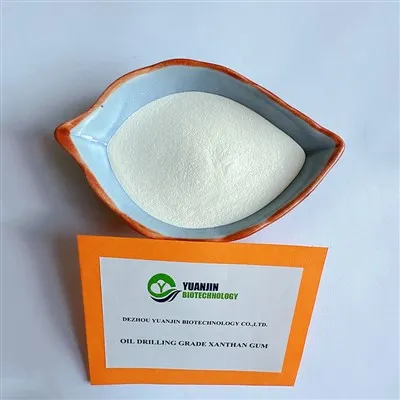
As a trusted supplier of Food Grade Xanthan Gum, I am often asked about its performance under various conditions, especially at high temperatures. In this blog, I will delve into the behavior of food grade xanthan gum when exposed to elevated temperatures, exploring its properties, applications, and considerations for use in high - heat scenarios.
Chemical Structure and Basic Properties
Xanthan gum is a polysaccharide produced by the fermentation of glucose or sucrose by the bacterium Xanthomonas campestris. Its chemical structure consists of a main chain of β - (1,4) - linked D - glucose units, with trisaccharide side - chains attached to the main chain at every second glucose residue. This unique structure gives xanthan gum its distinctive properties, such as high viscosity at low concentrations, excellent stability over a wide range of pH values, and good compatibility with other ingredients.
Under normal conditions, food grade xanthan gum forms a highly viscous solution when dissolved in water. It can provide thickening, stabilizing, emulsifying, and suspending effects, making it a popular ingredient in the food industry. However, when exposed to high temperatures, its behavior changes, and it is crucial to understand these changes for proper application.
Behavior at High Temperatures
Viscosity Changes
One of the most significant aspects of xanthan gum's behavior at high temperatures is its viscosity response. Generally, as the temperature increases, the viscosity of xanthan gum solutions tends to decrease. This is because the thermal energy causes the polymer chains of xanthan gum to become more flexible and mobile, reducing the intermolecular interactions that contribute to solution viscosity.
However, the viscosity reduction of xanthan gum at high temperatures is relatively moderate compared to some other thickeners. Xanthan gum has a certain degree of thermal stability, and it can maintain a relatively high viscosity even at elevated temperatures. For example, in a study published in the Journal of Food Science, it was found that a 1% xanthan gum solution could retain a significant portion of its initial viscosity when heated to 80°C for a short period. This property makes xanthan gum suitable for applications where some thickening effect is required during high - temperature processes, such as in the production of sauces, soups, and baked goods.
Gelation and Structural Integrity
At high temperatures, xanthan gum may also undergo changes in its gelation properties. In some cases, heating can cause xanthan gum to form a more stable gel structure. This is because the heat can promote the formation of additional cross - links between the polymer chains, enhancing the overall structural integrity of the gel.
However, if the temperature is too high or the heating time is too long, the gel structure may break down. The excessive thermal energy can disrupt the intermolecular forces holding the gel together, leading to a loss of viscosity and a change in the texture of the product. For example, in the production of dairy - based desserts, over - heating a xanthan - gum - thickened mixture can result in a syneresis (separation of liquid from the gel) phenomenon, which is undesirable for product quality.
Chemical Stability
Food grade xanthan gum is generally chemically stable at high temperatures within a certain range. It does not undergo significant degradation or chemical reactions under normal high - temperature food processing conditions. This stability is due to its chemical structure and the nature of the glycosidic bonds in its polymer chains.
However, in the presence of certain catalysts or at extremely high temperatures (above 150°C), xanthan gum may start to degrade. The degradation products can have an adverse effect on the quality and safety of the food product. Therefore, it is important to control the temperature and processing time when using xanthan gum in high - heat applications.
Applications at High Temperatures
Baked Goods
In the baking industry, xanthan gum is often used as a thickener and stabilizer. During the baking process, the dough or batter is exposed to high temperatures. Xanthan gum can help to improve the texture and volume of baked goods by providing viscosity and preventing the collapse of the structure.
For instance, in gluten - free baking, xanthan gum is essential as it mimics the elasticity provided by gluten. When the dough is heated in the oven, the xanthan gum maintains its ability to hold air bubbles, resulting in a lighter and more tender crumb. Even at the high temperatures of baking (usually around 180 - 220°C), xanthan gum can still play an important role in ensuring the quality of the final product.
Sauces and Soups
Many sauces and soups require heating during their production or preparation. Food grade xanthan gum can be used to thicken these products. It can withstand the high - temperature cooking processes and maintain a suitable viscosity, preventing the sauce or soup from becoming too thin.
For example, in the production of tomato - based sauces, which are often simmered at high temperatures for a long time, xanthan gum can help to keep the sauce thick and prevent the separation of ingredients. It can also improve the mouthfeel of the sauce, providing a smooth and creamy texture.
Dairy Products
In dairy processing, high - temperature treatments such as pasteurization and ultra - high - temperature (UHT) processing are common. Xanthan gum can be used in dairy products like yogurt, ice cream, and cream cheese to improve their stability and texture.
During pasteurization (usually at 72°C for 15 seconds or equivalent), xanthan gum can maintain its thickening and stabilizing properties, ensuring that the dairy product has a consistent texture. In UHT processing, which involves heating the product to 135 - 150°C for a few seconds, xanthan gum still shows a certain degree of thermal stability, although the processing conditions need to be carefully controlled to avoid excessive degradation.
Considerations for Using Xanthan Gum at High Temperatures
Dosage
The dosage of xanthan gum is crucial when using it in high - temperature applications. A higher dosage may provide better thickening and stabilizing effects at high temperatures, but it can also affect the flavor and texture of the final product if not carefully controlled. It is recommended to conduct small - scale tests to determine the optimal dosage for each specific application.
Processing Conditions
The processing temperature, time, and heating rate all have an impact on the performance of xanthan gum. A sudden increase in temperature or a long - term exposure to high temperatures may cause more significant changes in its properties. Therefore, it is necessary to optimize the processing conditions to ensure the best performance of xanthan gum.
Compatibility with Other Ingredients
Xanthan gum may interact with other ingredients in the food system, especially at high temperatures. For example, it can interact with proteins, starches, and salts, which can affect its thickening and stabilizing effects. It is important to consider the compatibility of xanthan gum with other ingredients when formulating high - temperature food products.


Conclusion
Food grade xanthan gum shows a complex behavior at high temperatures. While its viscosity generally decreases, it still maintains a certain degree of thickening ability and chemical stability within a reasonable temperature range. Its unique properties make it suitable for a wide range of high - temperature food applications, such as baked goods, sauces, soups, and dairy products.
As a [Inerpolating the business area]Food Grade Xanthan Gum supplier, we ensure the high quality and stability of our products. Our xanthan gum is carefully produced to meet the strict standards of the food industry, providing excellent performance even at high temperatures. If you are looking for a reliable xanthan gum supplier for your high - temperature food processing needs, we are here to help. Whether you need it for Link text: Xanthan Gum Thickener in sauces, Link text: Xanthan Gum Oil Drilling Grade API applications (although this is mainly for non - food use but shows our product variety), or Link text: Xanthan Gum Thickener in general food production, we have the right solution for you.
Contact us today to discuss your specific requirements and start a successful procurement negotiation. We are committed to providing you with the best products and services to meet your business needs.
References
- Journal of Food Science: [Volume and Issue number where the xanthan gum viscosity study was published]
- Textbook on Food Polysaccharides and Their Applications: [Author, Year of Publication]
- Research Paper on Thermal Stability of Xanthan Gum in Dairy Processing: [Author, Journal Name, Year of Publication]