


Anatase Titanium Dioxide
What is Anatase Titanium Dioxide
Anatase titanium dioxide, also known as titanium(IV) oxide or titania, is the inorganic compound derived from titanium with the chemical formula TiO ₂. When used as a pigment, it is called titanium white, Pigment White 6, or CI 77891. It is a white solid that is insoluble in water, although mineral forms can appear black.
Benefits of Anatase Titanium Dioxide
High Photocatalytic Activity: Anatase titanium dioxide exhibits excellent photocatalytic activity, especially under UV light. This property makes it highly effective in photocatalysis-based applications, such as air and water purification, self-cleaning surfaces, and the degradation of organic pollutants.
Efficient UV Absorption: Anatase titanium dioxide has a high absorption capacity for UV light. It can absorb a significant portion of harmful UV radiation, providing protection against UV-induced damage and degradation. This feature is valuable in applications like sunscreen formulations, coatings, and materials exposed to sunlight.
Enhanced Optical Properties: Anatase titanium dioxide has excellent light-scattering properties, which contribute to its high refractive index. It results in improved whiteness, brightness, and opacity in various products, including paints, pigments, cosmetics, and coatings. It is also used as a whitening agent in plastics and papers.
Photostability: Anatase titanium dioxide is known for its photostability, meaning it can retain its properties and stability even when exposed to light for extended periods. This makes it a suitable choice for outdoor applications that require durability and resistance to degradation caused by sunlight exposure.
Antibacterial and Antimicrobial Properties: Anatase titanium dioxide has inherent antibacterial and antimicrobial properties. When activated by UV light, it can effectively kill or inhibit the growth of bacteria, viruses, and other microorganisms. This makes it useful in various applications such as antibacterial coatings, air filters, and medical devices.
Catalytic Applications: Anatase titanium dioxide serves as an efficient catalyst in various chemical reactions. Its catalytic properties find applications in areas such as organic synthesis, wastewater treatment, hydrogen production, and environmental remediation. Its high reactivity and selectivity make it a valuable catalyst.
Low Toxicity: Anatase titanium dioxide is considered relatively safe and has low toxicity. It is widely used in consumer products, including cosmetics, food additives, and pharmaceuticals. Its low toxicity profile contributes to its acceptance and regulatory approval for use in various applications.
Availability and Cost: Anatase titanium dioxide is readily available and has a lower production cost compared to other forms of titanium dioxide, such as rutile. This makes it a cost-effective option for manufacturers and industries that require titanium dioxide in their products.

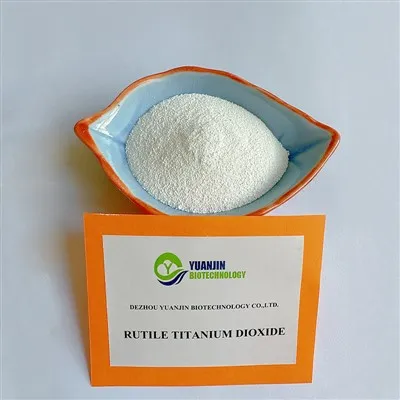
Crystal structure:Rutile
Using:Paint, Ceramics, Cosmetics, Plastics, Leather, Ink
CAS NO:13463-67-7
EINECS : 236-675-5
Formula:TiO2
Color:white
Grade Standard:Industrial grade
Classification:Sulfuric Acid Method/Chloride process
HS CODE:3206111000
Appearance:Powder

Crystal structure:Anatase
Using:Paint, Ceramics, Cosmetics, Plastics, Leather, Ink
CAS NO:13463-67-7
EINECS : 236-675-5
Formula:TiO2
Color:white
Grade Standard:Industrial grade
Classification:Sulfuric Acid Method/Chloride process
HS CODE:3206111000
Appearance:Powder
Why Choose us
Quality Assurance
The company has developed into shandong province AAA credit enterprises, high-tech enterprises. Our products include sodium gluconate, Xanthan gum Titanium dioxideall Citric acid of which are certified by ISO9001, ISO22000, KOSHER, HALAL, HACCP, API certification etc.
Cutting-edge technology
Our company has a complete set of testing equipment, a perfect testing laboratory, microbial culture laboratory, and millions of ICP trace element testing equipment. A perfect blend of global experience andexpertise to further our focus on technology.
Rich Experience
Our company has many years of production work experience. The concept of customer-oriented and win-win cooperation makes the company more mature and stronger.
Appearances of Rutile and Anatase TiO2 Nanoparticles
Rutile titanium dioxide is a component that contains mainly TiO2 with a dark red appearance, whereas Anatase titanium dioxide has colorless to blue appearance.
Colors of Rutile and Anatase TiO2 Nanoparticles
Rutile titanium dioxide has dark red color and the finely pulverized rutile titanium dioxide has a bright white color, whereas Anatase titanium dioxide has a dark color in the presence of impurities, but its pure form is colorless or white.
Optical activity of Anatase and Rutile Titanium Dioxide Nanoparticles
Rutile titanium dioxide is optically positive, whereas Anatase titanium dioxide is optically negative.
Occurrences of Anatase and Rutile TiO2 Nanoparticles
Rutile is a type of titanium dioxide that is found naturally in huge quantity as compared to anatase titanium dioxide.
UV absorptions of Anatase and Rutile Titanium Oxide Nanoparticles
Ultraviolent absorption by rutile titanium dioxide is great, whereas ultraviolet absorption by anatase titanium dioxide is low.
Hardness of Rutile and Anatase Titanium Dioxide Nanoparticles
The hardness of Rutile titanium dioxide is great, whereas Anatase titanium dioxide is not that much hard.
Specific gravity of two types of TiO2 Nanoparticles
The density of Rutile titanium dioxide is high, whereas the density of the anatase titanium dioxide is low.
Different crystal structures of two types TiO2 Nanoparticles
The anatase and rutile titanium oxide crystal structures consist of interconnected TiO2 octahedra. The difference between the two is that the degree of distortion of the octahedron is different for both.
Price Differences between Anatase and Rutile TiO2 Nanoparticles
Due to the relatively high price of rutile titanium dioxide, it is often used in high-end products. Rutile titanium dioxide is not only used in the production of high-quality water-based printing materials such as paints, inks and plastic woodwork. On the other hand, Anatase titanium dioxide is less expensive than rutile titanium dioxide and is mainly involved in the production of plastics, printing inks, printing inks, and coatings.
Anatase Titanium Dioxide Nanoparticles Applications


Photocatalysis
Anatase titanium dioxide (TiO2) nanoparticles are highly effective photocatalysts. They are widely used in environmental purification processes, such as air and water treatment. The high surface area and excellent photocatalytic activity enable the degradation of organic pollutants and the elimination of harmful microorganisms under UV light. TiO2 nanoparticles can decompose organic pollutants and aerosols through photocatalytic reactions when mixed with cement, making them ideal for removing aromatic, ammonia, NOx, and aldehyde pollutants.
Self-Cleaning Surfaces
The self-cleaning properties of anatase TiO2 nanoparticles make them ideal for coatings on buildings, windows, and other surfaces. When exposed to sunlight, these coatings decompose organic matter and dirt, leading to surfaces that clean themselves with minimal maintenance. This technology is increasingly being used in infrastructural projects such as tunnels, buildings, and pavements where concrete and cement are involved.
Did you know that silica nanoparticles are also used as water and dirt repellent in clothing? Learn now.
Sunscreens and Cosmetics
Due to their high refractive index and UV-blocking capabilities, anatase TiO2 nanoparticles are commonly used in sunscreens and cosmetic products. They provide effective protection against harmful UV radiation while maintaining transparency and aesthetic appeal in formulations. Additionally, their biocompatibility and environmental friendliness enhance their suitability for these applications.
Dye-Sensitized Solar Cells (DSSCs)
Anatase TiO2 nanoparticles are crucial components in dye-sensitized solar cells (DSSCs). Their unique electronic properties enhance the efficiency of light absorption and conversion, making them integral to the development of advanced photovoltaic devices.
Water Splitting Devices
In water splitting devices, anatase TiO2 nanoparticles serve as semiconductors and photocatalysts. When irradiated by ultraviolet light in the presence of a gas or liquid, they facilitate the splitting of water molecules into hydrogen and oxygen, contributing to the generation of clean energy.
Optical Biosensors
TiO2 nanoparticles are employed as optical biosensors due to their excellent biocompatibility and ability to interact with biological molecules. These biosensors can detect various biological analytes with high sensitivity and specificity, making them valuable tools in medical diagnostics and environmental monitoring.
Biological Applications
Anatase TiO2 nanoparticles have found applications in biological systems, particularly in skin cancer treatment. When activated by UV light, they exhibit high efficiency in targeting and destroying cancer cells. Additionally, complex TiO2 nanoparticles combined with doxorubicin, a cancer drug, improve the drug's quality and efficacy.
How To Choose A Anatase Titanium Dioxide
Types of Titanium Dioxide: There are two main types of titanium dioxide – Anatase and Rutile. The latter has become a preferable option in cosmetics due to its high opacity and durability while the former is used in applications where less opacity is preferred.
Particle Size: The smaller the particle size, the better the product can be blended on the skin. For cosmetic-grade titanium dioxide, the typical range would be between 100 nm and 200 nm. Smaller particles offer better dispersion and a more natural-looking finish.
Surface Treatment: Many titanium powders are treated with surface modifiers to enhance compatibility with other ingredients and maintain stability. Look for those that suggest silanes or fatty acids as treatment options, which help avoid agglomeration and improve formulation performance.
Purity and Certification: The purity level should inform your choice of this titanium oxide. In personal care products, highly purified grades (≥ 99.5%) are normally employed as they reduce the chances of contamination occurring among others. Certification such as Cosmetic Ingredient Review (CIR) or Ecocert may also mean quality.
UV Protection Ratings: Check the SPF Value and UVA/UVB protection level stated in the product specifications. Formulations that work well would have high SPF ratings whenever titanium dioxide is applied as a UV filter, given its effectiveness in protecting the skin.
Regulatory Compliance: Make sure that your chosen type of titanium dioxide meets local regulations for cosmetic use. Some regions impose specific requirements on certain titanium oxide forms regarding safety assessment and labeling them properly.
Cosmetic Properties: Evaluate this ingredient's additional aesthetic qualities, such as the matting effect or color correction possibility usually seen in foundations or powders. These are often determined by the refractive index, which is supposed to be 2.4-2.7 for cosmetic purposes.
Versatility in Formulations: Consider how well your anatase titanium dioxide blends with other ingredients, such as creams and lotions, without altering the texture, spreadability, and emulsifying properties of the creams as mentioned earlier and lotions.
Properties of Anatase Titanium Dioxide
Chemical formula: Tio2 – anatase titanium dioxide has the same chemical formula as rutile and brookite, all being different polymorphs of titanium dioxide.
Reactivity: Anatase titanium dioxide is known for its higher reactivity compared to rutile.It exhibits significant photocatalytic activity, making it useful in applications such as environmental remediation and solar energy conversion.
Photocatalytic properties: One of the notable chemical properties of anatase titanium dioxide is its ability to undergo photocatalysis. When exposed to ultraviolet light, anatase titanium dioxide can catalyze various chemical reactions, such as the degradation of organic pollutants in water.
Transformation to rutile: At elevated temperatures, anatase titanium dioxide can undergo a phase transformation to rutile. This transformation is a reversible process and is influenced by factors such as temperature and pressure.
Thermal stability: Anatase titanium dioxide is generally less thermally stable than rutile, and its stability is influenced by conditions such as pressure and the presence of impurities.
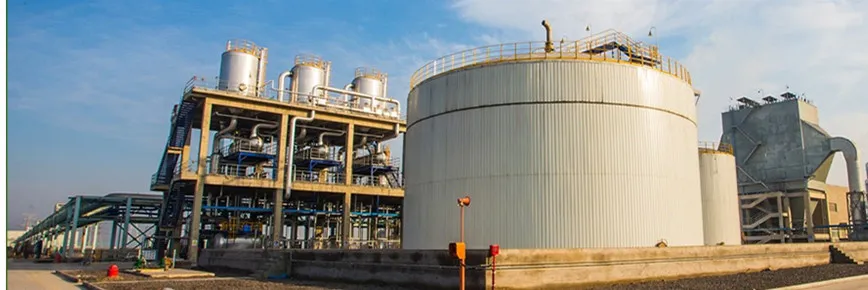
Dezhou Yuanjin Biotechnology Co.,Ltd. is located in dezhou city, Shandong Province, China with beautiful scenery and convenient transportation. The company has developed into shandong province AAA credit enterprises, high-tech enterprises. Our products include sodium gluconate, Xanthan gum Titanium dioxideall Citric acid of which are certified by ISO9001, ISO22000, KOSHER, HALAL, HACCP, API certification etc. Our products sell well both at home and abroad. Sales area covers more than 20 provinces in China, Southeast Asia, Europe,Middle Eastern countries, Africa and other regions more than 50 countries. The annual output value of the company is 10 billion yuan and the annual profit is 50 million yuan. Scientific and technological innovation is the driving force of the company's sustainable development.
Our company is an enterprise integrating scientific research, production, testing and sales. Our company has a complete set of testing equipment, a perfect testing laboratory, microbial culture laboratory, and millions of ICP trace element testing equipment. A perfect blend of global experience andexpertise to further our focus on technology.
Our company hopes to be the "customer is God, quality is fundamental" purpose, "customer satisfaction, continuous improvement - is our pursuit" principle, in the days to come, as always, wholeheartedly for new and old customers to provide quality products and services. Thanks to our stable quality and good service, many good partners have good cooperation from now to the future.


Asked Questions
Hot Tags: anatase titanium dioxide, China anatase titanium dioxide manufacturers, suppliers, factory, titanium dioxide for rubber, paint grade titanium dioxide, mixture of titanium dioxide, cost effective titanium dioxide, standard titanium dioxide, titanium dioxide for plastics
Previous
No InformationYou Might Also Like


Send Inquiry