


Food Grade Xanthan Gum
What is Food Grade Xanthan Gum
Food grade xanthan gum is used in food production to improve the texture, consistency and shelf-life of foods such as salad dressings, soups, sauces and baked goods. It is particularly useful for those with coeliac disease or non-coeliac gluten sensitivity who must follow a gluten-free diet.
Benefits of Food Grade Xanthan Gum
Lowering or stabilizing blood sugar
A 2016 study found that food grade xanthan gum could lower the glycemic index of rice. After a group of people ate rice that was coated with food grade xanthan gum, their blood sugar levels were lower.
The benefits were most significant when participants consumed rice covered with xanthan, instead of using food grade xanthan gum before or after meals.
So foods containing food grade xanthan gum might offer the most potent blood sugar-lowering benefits.
Food grade xanthan gum may also stabilize blood sugar. A 2013 studytrusted source found that food grade xanthan gum mixed with beta-glucan (a type of sugar found in plants) could help prevent blood sugar spikes.
Reducing cholesterol
Some research suggests that, when taken in very high doses, food grade xanthan gum may lower cholesterol levels. A 1987 studytrusted source, for example, found that men who consumed food grade xanthan gum for about 3 weeks experienced a 10 percent reduction in cholesterol.
There is little evidence that food grade xanthan gum is beneficial on its own in the treatment of high cholesterol. A newer study has yet to be done to confirm these results.
Saliva substitute and treating dry mouth
Food grade xanthan gum may be a useful and safe saliva substitute for people who experience chronic dry mouth. Some varieties of toothpastetrusted source for dry mouths contain food grade xanthan gum to help lock in moisture.
Laxative
Because food grade xanthan gum helps to bind water, it may also help act as a laxative. The food thickener swells in the digestive tract, helping the intestines to remain moist and supporting gastrointestinal function.
Making it easier to swallow
Some diseases can make swallowing difficult, especially when the mouth and throat are dry. A 2014 studytrusted source found that food grade xanthan gum could help people with dysphagia, a swallowing disorder, safely swallow their food.
Food grade xanthan gum does this by thickening food and saliva, making it easier for both to move down the throat. This could reduce the risk of choking and make eating safer.
Treating cancer
Food grade xanthan gum may help treat some forms of cancer by slowing their growth. A 2009 studytrusted source, for example, looked at mice with melanoma, a type of skin cancer. Mice treated with food grade xanthan gum lived longer, and their tumors grew more slowly.
Role in gluten-free food
For people with celiac disease and gluten-sensitivity, foods containing gluten can cause intense stomach pain, diarrhea, and other unpleasant symptoms. Flour and other ingredients in many baked goods contain gluten.
Gluten-free products rely on substitutes that can make them resemble the texture, crumb, and flexibility of gluten-containing bread. Food grade xanthan gum thickens food and binds moisture, potentially improving the properties of gluten-free baked goods.

Type:Thickener
Using: drilling
CAS No.:11138-66-2
Formula:(C35h49o29)N
EINECS No.:234-394-2
Color:Yellow
HS CODE:39139000.90
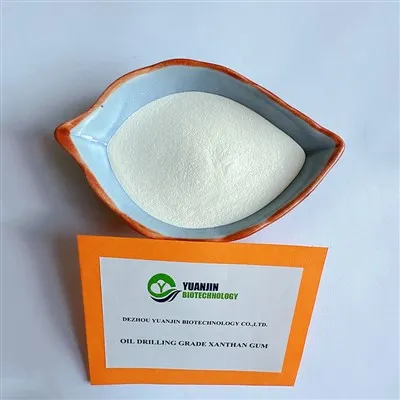
Appearance:Powder
Mesh:80/200

Xanthan Gum Oil Drilling Grade
Type:Thickener
Using: drilling
CAS No.:11138-66-2
Formula:(C35h49o29)N
EINECS No.:234-394-2
Color:Yellow
HS CODE:39139000.90
Appearance:Powder
Mesh:80/200

Industrial Grade Xanthan Gum
Type:Thickener
Using: drilling
CAS No.:11138-66-2
Formula:(C35h49o29)N
EINECS No.:234-394-2
Color:Yellow
HS CODE:39139000.90
Appearance:Powder
Mesh:80/200

Oil Industry Xanthan Gum
Type:Thickener
Using: drilling
CAS No.:11138-66-2
Formula:(C35h49o29)N
EINECS No.:234-394-2
Color:Yellow
HS CODE:39139000.90
Appearance:Powder
Mesh:80/200

Xanthan Gum For Drilling
Type:Thickener
Using: drilling
CAS No.:11138-66-2
Formula:(C35h49o29)N
EINECS No.:234-394-2
Color:Yellow
HS CODE:39139000.90
Appearance:Powder
Mesh:80/200

Drilling Chemicals Xanthan Gum
Type:Thickener
Using: drilling
CAS No.:11138-66-2
Formula:(C35h49o29)N
EINECS No.:234-394-2
Color:Yellow
HS CODE:39139000.90
Appearance:Powder
Mesh:80/200

Xanthan Gum Drilling Mud
Type:Thickener
Using: drilling
CAS No.:11138-66-2
Formula:(C35h49o29)N
EINECS No.:234-394-2
Color:Yellow
HS CODE:39139000.90
Appearance:Powder
Mesh:80/200

Type:Thickener
Using: Food additive
CAS No.:11138-66-2
Formula:(C35h49o29)N
EINECS No.:234-394-2
Color:Yellow
HS CODE:39139000.90
Appearance:Powder
Mesh:80/200

Xanthan Gum Polymer
Type:Thickener
Using: drilling
CAS No.:11138-66-2
Formula:(C35h49o29)N
EINECS No.:234-394-2
Color:Yellow
HS CODE:39139000.90
Appearance:Powder
Mesh:80/200
Why Choose us
Quality Assurance
The company has developed into shandong province AAA credit enterprises, high-tech enterprises. Our products include sodium gluconate, Xanthan gum Titanium dioxideall Citric acid of which are certified by ISO9001, ISO22000, KOSHER, HALAL, HACCP, API certification etc.
Cutting-edge technology
Our company has a complete set of testing equipment, a perfect testing laboratory, microbial culture laboratory, and millions of ICP trace element testing equipment. A perfect blend of global experience andexpertise to further our focus on technology.
Rich Experience
Our company has many years of production work experience. The concept of customer-oriented and win-win cooperation makes the company more mature and stronger.
Physical And Chemical Properties Of Food Grade Xanthan Gum
|
Property |
Effect |
|
Viscosity |
Food grade xanthan gum is an efficient thickener used in food systems. Concentrations as low as 0.1% by weight will cause a significant increase in viscosity. |
|
Pasting Properties |
In a study, food grade xanthan gum increased hot paste viscosity and final viscosity while decreasing peak viscosity in starches. |
|
Phase stability |
Food grade xanthan gum is not an emulsifier but helps to stabilize an emulsion once it has been formed. It reduces the surface tension between the two immiscible substances, such as oil and water, preventing them from separating. |
|
Cloud stability |
Since juice particles are negatively charged, adding food gums with a negative charge is expected to increase electrostatic repulsive forces between particles. |
|
Foam Stability |
Adsorption at fluid interfaces of whey proteins was improved by synergistic interactions with xanthan gum, resulting in better surface and viscoelastic properties of the film interface. |
|
Water absorption |
In a study, xanthan gum steadily increased the water absorption and mixing time of whole wheat dough. The highest water absorption, with a 20% increase, was noted for 1.0% xanthan gum. |
|
Freezing properties |
Food grade xanthan gum inhibits the formation of elongated ice crystals in frozen desserts, preventing growth in crystal size at low temperatures in abusive storage with temperature fluctuations. |
Five Popular Uses for Food Grade Xanthan Gum
In order to make gluten-free baked goods taste, look, and feel like their traditional counterparts, you often need to add a binding agent to the dough. In traditional flours, gluten is a natural binder that allows dough to stretch, roll, bend, and be shaped.
When used in gluten-free baking, food grade xanthan gum provides elasticity and stickiness to doughs and batters. Without the use of food grade xanthan gum as a binder, your cakes, breads, and crusts can crumble.
You can shop gums and other baking ingredients here.
Food grade xanthan gum increases a liquid's viscosity, meaning it is a "thickener." it's a great choice for thickening liquids to make them into flavorful sauces. You can use food grade xanthan gum for everything from the minor thickening of gravy to creating very thick syrups. Sauces thickened this way take on a texture similar to reduced liquid or fatty sauces. It increases flavor and clinginess, which helps the liquids to stick to food.
Gelatin is a food derived from collagen and is a common gelling agent used in food. It can also be used as a stabilizer, thickener, and texturizer. Anyone following a vegan or vegetarian lifestyle might wish to avoid gelatin and gelatin-containing products. In many instances, food grade xanthan gum can replace gelatin to stabilize and thicken recipes.
While food grade xanthan gum is not an emulsifier, it does help to prevent oil separation by stabilizing emulsions. It's a common ingredient in salad dressings for this reason. While under normal circumstances oil and vinegar would naturally separate, food grade xanthan gum prevents this separation. It also helps keep the spices and seasonings remain suspended.
Small amounts of food grade xanthan gum can be used in ice cream to produce a smoother, creamier texture by preventing the formation of ice crystals. This helps the ice cream taste richer and high in fat without the use of heavy cream. This makes food grade xanthan gum a great addition to ice creams made from non-dairy milk, including soy, almond, or coconut milk. Food grade xanthan gum helps make the consistency of vegan ice cream more like its traditional counterpart.
How to Use Food Grade Xanthan Gum: A Beginner's Guide
Food grade xanthan gum is one ingredient that's making a name for itself in gluten free cooking. Used in all sorts of recipes ranging from dressings to muffins, it's a must-have ingredient if you're avoiding gluten. Widely available and easy to work with, in small amounts, food grade xanthan gum works excellent as a thickening agent for sauces, to create light foams and to keep ingredients from separating when making smoothies, dough and batter.
Its neutral flavor mixes well with nearly any cuisine without changing its original taste, and it helps add a smoother texture to liquid-based treats like ice cream. In addition, when combined with gluten free flours, food grade xanthan gum produces a lot of the structure gluten would add, helping doughs keep their intended shape and rise during the baking process.
Food grade xanthan gum is a simple-to-use ingredient that will ensure that your recipes turn out as great as you'd like.From flatbreads to fluffy cakes, we're confident that once you use this ingredient, you'll begin adding it to all of your gluten free recipes.
Dezhou Yuanjin Biotechnology Co.,Ltd. is located in dezhou city, Shandong Province, China with beautiful scenery and convenient transportation. The company has developed into shandong province AAA credit enterprises, high-tech enterprises. Our products include sodium gluconate, Xanthan gum Titanium dioxideall Citric acid of which are certified by ISO9001, ISO22000, KOSHER, HALAL, HACCP, API certification etc. Our products sell well both at home and abroad. Sales area covers more than 20 provinces in China, Southeast Asia, Europe,Middle Eastern countries, Africa and other regions more than 50 countries. The annual output value of the company is 10 billion yuan and the annual profit is 50 million yuan. Scientific and technological innovation is the driving force of the company's sustainable development.
Our company is an enterprise integrating scientific research, production, testing and sales. Our company has a complete set of testing equipment, a perfect testing laboratory, microbial culture laboratory, and millions of ICP trace element testing equipment. A perfect blend of global experience andexpertise to further our focus on technology.
Our company hopes to be the "customer is God, quality is fundamental" purpose, "customer satisfaction, continuous improvement - is our pursuit" principle, in the days to come, as always, wholeheartedly for new and old customers to provide quality products and services. Thanks to our stable quality and good service, many good partners have good cooperation from now to the future.



Asked Questions
Hot Tags: food grade xanthan gum, China food grade xanthan gum manufacturers, suppliers, factory, sodium gluconate for construction, xanthan gum 500g, sodium gluconate for mining industry, sodium gluconate for quality control, wholesale titanium dioxide, sodium gluconate for adhesive industry
Previous
Xanthan Gum ThickenerYou Might Also Like


Send Inquiry