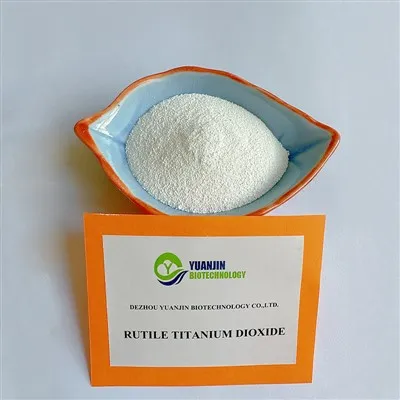
As a reliable supplier of Anatase Titanium Dioxide, I am often asked about its solubility characteristics. In this blog post, I will delve into the details of the solubility of Anatase Titanium Dioxide, exploring its behavior in different solvents and under various conditions.
1. General Overview of Anatase Titanium Dioxide
Anatase Titanium Dioxide is one of the three main crystalline forms of titanium dioxide, the other two being rutile and brookite. It is widely used in various industries, such as paints, coatings, plastics, and paper, due to its excellent optical properties, high refractive index, and good chemical stability. Anatase Titanium Dioxide has a tetragonal crystal structure, which gives it unique physical and chemical characteristics compared to Rutile Titanium Dioxide.
2. Solubility in Water
Anatase Titanium Dioxide is essentially insoluble in water under normal conditions. This is because of its strong ionic and covalent bonding within the crystal lattice. The titanium - oxygen bonds in Anatase Titanium Dioxide are very stable, and water molecules do not have sufficient energy to break these bonds and disperse the particles into individual ions or molecules. In fact, the solubility of Anatase Titanium Dioxide in water at room temperature is extremely low, on the order of parts per billion or less.
However, in some cases, a very small amount of surface - adsorbed water can be present on the surface of Anatase Titanium Dioxide particles. This is due to the hydrophilic nature of the surface hydroxyl groups that can form hydrogen bonds with water molecules. But this is not true solubility in the sense of the dissolution of the entire crystal structure.


3. Solubility in Inorganic Acids
3.1 Hydrochloric Acid (HCl)
Anatase Titanium Dioxide is relatively stable in dilute hydrochloric acid solutions. At room temperature, the reaction between Anatase Titanium Dioxide and dilute HCl is very slow. However, upon heating, the solubility of Anatase Titanium Dioxide in concentrated hydrochloric acid increases. The reaction can be represented by the following equation:
TiO₂ + 4HCl → TiCl₄ + 2H₂O
The chloride ions in the hydrochloric acid react with the titanium in Anatase Titanium Dioxide to form titanium tetrachloride, which is soluble in the acid solution. But the reaction rate and the extent of dissolution depend on factors such as the acid concentration, temperature, and the particle size of the Anatase Titanium Dioxide. Smaller particle sizes generally have a higher surface area, which can increase the reaction rate.
3.2 Sulfuric Acid (H₂SO₄)
In concentrated sulfuric acid, Anatase Titanium Dioxide can react to form titanyl sulfate (TiOSO₄). The reaction is as follows:
TiO₂ + H₂SO₄ → TiOSO₄ + H₂O
This reaction usually requires heating to proceed at a reasonable rate. The solubility of Anatase Titanium Dioxide in sulfuric acid is also affected by the acid concentration and temperature. Higher acid concentrations and elevated temperatures promote the dissolution process.
4. Solubility in Organic Solvents
Anatase Titanium Dioxide is generally insoluble in most common organic solvents such as alcohols (e.g., ethanol, methanol), hydrocarbons (e.g., hexane, toluene), and ketones (e.g., acetone). The non - polar nature of these organic solvents and the strong bonding in Anatase Titanium Dioxide prevent significant interactions that would lead to dissolution.
However, in some cases, surface - modified Anatase Titanium Dioxide can show improved dispersibility in organic solvents. For example, when the surface of Anatase Titanium Dioxide is coated with organic ligands, it can form a more compatible interface with organic solvents, allowing for better dispersion rather than true dissolution.
5. Factors Affecting Solubility
5.1 Particle Size
As mentioned earlier, the particle size of Anatase Titanium Dioxide plays a crucial role in its solubility behavior. Smaller particles have a larger surface area, which provides more sites for chemical reactions with solvents. This means that smaller particles of Anatase Titanium Dioxide are more likely to react with acids or other reactive solvents compared to larger particles.
5.2 Temperature
Temperature has a significant impact on the solubility of Anatase Titanium Dioxide. In general, increasing the temperature provides more energy for chemical reactions to occur. For example, in the reaction with acids, higher temperatures can break the strong bonds in Anatase Titanium Dioxide more easily, leading to increased solubility.
5.3 pH
The pH of the solution can also affect the solubility of Anatase Titanium Dioxide. In acidic solutions, as we have seen, the reaction with acids can lead to dissolution. In alkaline solutions, Anatase Titanium Dioxide can react to form titanates. For example, in a strong alkaline solution with sodium hydroxide (NaOH), the following reaction can occur:
TiO₂ + 2NaOH → Na₂TiO₃ + H₂O
The solubility in alkaline solutions is also influenced by factors such as temperature and the concentration of the alkali.
6. Implications for Industrial Applications
The solubility characteristics of Anatase Titanium Dioxide have important implications for its industrial applications. In the paint and coating industry, the insolubility in water and most organic solvents is beneficial as it ensures the stability and durability of the coatings. The pigment particles remain dispersed in the coating matrix without dissolving, providing long - lasting color and opacity.
In the production of titanium - based chemicals, the solubility of Anatase Titanium Dioxide in acids is exploited to extract titanium in a soluble form, which can then be further processed to obtain other titanium compounds.
7. Conclusion and Call to Action
Understanding the solubility characteristics of Anatase Titanium Dioxide is essential for both researchers and industries that use this versatile material. Whether you are formulating a new paint product, developing a titanium - based chemical process, or simply interested in the science behind it, our company can provide high - quality Anatase Titanium Dioxide that meets your specific requirements.
If you are looking for a reliable supplier of Anatase Titanium Dioxide, we invite you to contact us for more information and to discuss your procurement needs. Our team of experts is ready to assist you in finding the best solution for your application.
References
- Smith, J. K. (2018). Titanium Dioxide: Properties, Production, and Applications. CRC Press.
- Jones, A. B. (2020). Chemical Reactions of Metal Oxides. Elsevier.
- Brown, C. D. (2019). Solubility and Reactivity of Inorganic Compounds. Wiley.