Anatase Titanium Dioxide (TiO₂) is a remarkable material that has found extensive applications in various industries, particularly in the field of solar cells. As a leading supplier of Anatase Titanium Dioxide, I am excited to delve into the diverse applications of this material in solar cell technology.
Understanding Anatase Titanium Dioxide
Anatase Titanium Dioxide is one of the three main crystal forms of titanium dioxide, along with rutile and brookite. It is characterized by its unique crystal structure, which gives it distinct physical and chemical properties. Anatase TiO₂ has a tetragonal crystal structure with a bandgap of approximately 3.2 eV, making it an excellent semiconductor material. This bandgap allows it to absorb ultraviolet (UV) light and generate electron-hole pairs, which is crucial for its application in solar cells.
Applications in Solar Cells
Dye-Sensitized Solar Cells (DSSCs)
Dye-sensitized solar cells are a type of thin-film solar cell that mimics the process of photosynthesis. In DSSCs, anatase TiO₂ plays a crucial role as the photoanode material. The high surface area of anatase TiO₂ nanoparticles provides a large interface for dye adsorption, allowing for efficient light harvesting. When light is absorbed by the dye molecules, electrons are excited and injected into the conduction band of the anatase TiO₂. These electrons then travel through the TiO₂ network to the external circuit, generating an electric current.
The unique properties of anatase TiO₂, such as its high electron mobility and excellent charge transport properties, make it an ideal material for DSSCs. Additionally, anatase TiO₂ can be easily synthesized into nanoparticles with controlled sizes and shapes, which further enhances its performance in DSSCs. As a Anatase Titanium Dioxide supplier, we offer high-quality anatase TiO₂ nanoparticles that are specifically designed for DSSC applications.
Perovskite Solar Cells
Perovskite solar cells have emerged as a promising alternative to traditional silicon-based solar cells due to their high efficiency and low cost. Anatase TiO₂ is commonly used as the electron transport layer (ETL) in perovskite solar cells. The ETL plays a crucial role in transporting electrons from the perovskite layer to the electrode, while preventing the recombination of electrons and holes.


Anatase TiO₂ has several advantages as an ETL material in perovskite solar cells. It has a suitable energy level alignment with the perovskite layer, which allows for efficient electron injection. Additionally, anatase TiO₂ has a high electron mobility and good chemical stability, which helps to improve the performance and stability of perovskite solar cells. Our company offers high-purity anatase TiO₂ materials that are optimized for use in perovskite solar cells.
Quantum Dot-Sensitized Solar Cells (QDSCs)
Quantum dot-sensitized solar cells are another type of thin-film solar cell that uses quantum dots as the light-absorbing material. Anatase TiO₂ can be used as the photoanode material in QDSCs, similar to its application in DSSCs. The high surface area of anatase TiO₂ nanoparticles provides a large interface for quantum dot adsorption, allowing for efficient light harvesting.
The unique properties of anatase TiO₂, such as its high electron mobility and excellent charge transport properties, make it an ideal material for QDSCs. Additionally, anatase TiO₂ can be easily modified to improve its performance in QDSCs. For example, surface modification of anatase TiO₂ nanoparticles can enhance their interaction with quantum dots, leading to improved light harvesting and charge transfer efficiency. As a Anatase Titanium Dioxide supplier, we offer a range of anatase TiO₂ materials that are suitable for QDSC applications.
Advantages of Anatase Titanium Dioxide in Solar Cells
High Light Absorption
Anatase TiO₂ has a high absorption coefficient in the UV region, which allows it to efficiently absorb UV light. This property is particularly important for solar cells, as a significant portion of the solar spectrum consists of UV light. By using anatase TiO₂ as the photoanode material, solar cells can effectively harvest UV light and convert it into electricity.
Excellent Charge Transport Properties
Anatase TiO₂ has a high electron mobility, which allows electrons to move quickly through the material. This property is crucial for solar cells, as it helps to minimize the recombination of electrons and holes, leading to improved efficiency. Additionally, anatase TiO₂ has a good charge transport property, which allows it to effectively transport electrons from the photoanode to the external circuit.
Chemical Stability
Anatase TiO₂ is a chemically stable material, which makes it suitable for use in solar cells. It can withstand harsh environmental conditions, such as high temperatures and humidity, without undergoing significant degradation. This property is important for the long-term stability and performance of solar cells.
Low Cost
Anatase TiO₂ is a relatively inexpensive material, which makes it an attractive option for solar cell applications. Compared to other semiconductor materials, such as silicon, anatase TiO₂ can be produced at a lower cost, making it more accessible for large-scale solar cell production.
Comparison with Rutile Titanium Dioxide
While anatase TiO₂ has many advantages for solar cell applications, it is important to note that rutile TiO₂ also has its own unique properties. Rutile TiO₂ has a higher density and a lower bandgap compared to anatase TiO₂, which gives it a higher absorption coefficient in the visible region. This property makes rutile TiO₂ more suitable for applications where visible light absorption is important, such as in some types of solar cells.
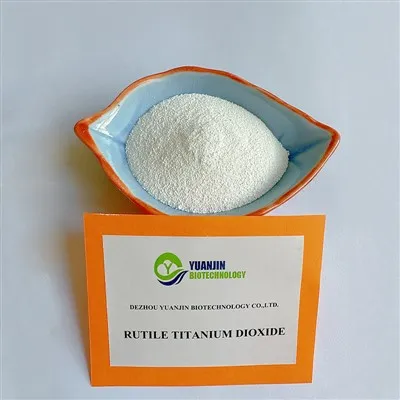
However, anatase TiO₂ has a higher surface area and a higher electron mobility compared to rutile TiO₂, which makes it more suitable for applications where high light harvesting and charge transport are required. Additionally, anatase TiO₂ is more easily synthesized into nanoparticles with controlled sizes and shapes, which further enhances its performance in solar cells. For more information on Rutile Titanium Dioxide, please visit our website.
Conclusion
Anatase Titanium Dioxide is a versatile material that has numerous applications in solar cell technology. Its unique properties, such as high light absorption, excellent charge transport properties, chemical stability, and low cost, make it an ideal material for use in various types of solar cells, including DSSCs, perovskite solar cells, and QDSCs. As a leading supplier of Anatase Titanium Dioxide, we are committed to providing high-quality products and excellent customer service. If you are interested in purchasing anatase TiO₂ for your solar cell applications, please contact us to discuss your specific requirements.
References
- O'Regan, B., & Grätzel, M. (1991). A low-cost, high-efficiency solar cell based on dye-sensitized colloidal TiO₂ films. Nature, 353(6346), 737-740.
- Kojima, A., Teshima, K., Shirai, Y., & Miyasaka, T. (2009). Organometal halide perovskites as visible-light sensitizers for photovoltaic cells. Journal of the American Chemical Society, 131(17), 6050-6051.
- Alivisatos, A. P. (1996). Semiconductor clusters, nanocrystals, and quantum dots. Science, 271(5251), 933-937.